
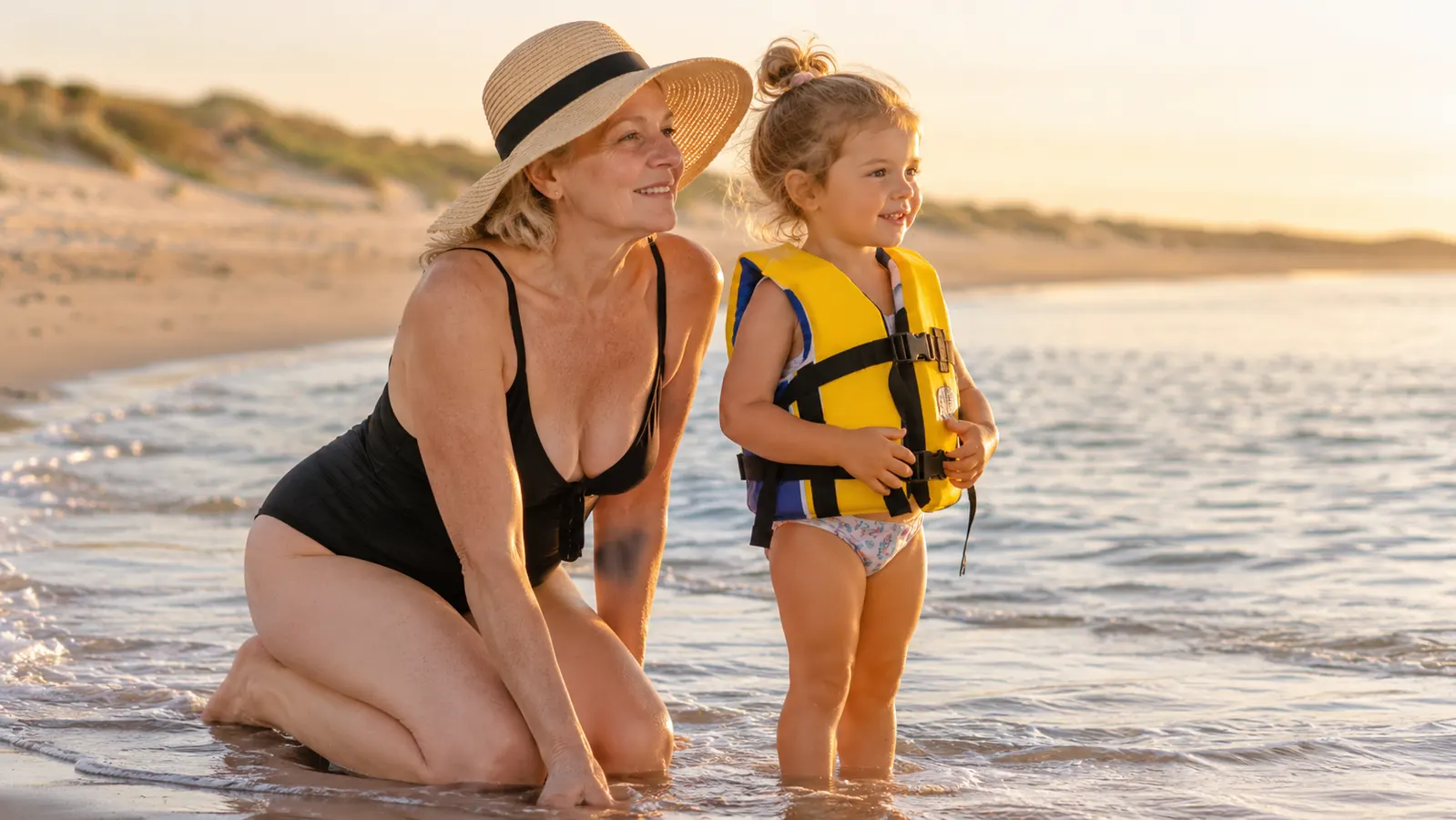
Last May I stood at the edge of the parking lot in Gulf Shores with a cooler in one hand, a beach chair under the other arm, and my stiff left knee telling me I had maybe one more trip to the car in me. Mason, six, was already running for the water. Ava, four, was right behind him. I had to decide, again, what they would wear in the surf, and I had been through enough beach seasons to know that the cheap floaties from the drugstore were not going to cut it. That was the weekend I ordered the Body Glove Paddle Pals.
A full season later, I can tell you exactly what I think of it. This is not a first-week review. This is the review from the end of August, after twelve beach days, two grandkids sharing the same vest, a lot of salt water, and enough sand to build a small dune. I am a retired school nurse. I spent thirty years watching kids fall off swings and into pools, and I do not hand out five-star opinions easily.
The Quick Verdict
The Paddle Pals is the life jacket I reach for when Mason and Ava are in the water. It fits both of them, it stays put, and it survived an entire Gulf Coast season. It is not a forever vest, and Lily outgrew it, but for the years it fits, it does the job better than anything else I have tried.
Amazon Check Today's Price →A USCG-approved vest that fits both my 6-year-old and my 4-year-old
Mason wears it at 44 pounds and Ava wears it at 36 pounds, same vest, same fit. It is approved to a real Coast Guard standard, and after a full season of salt water and sand it still closes the way it did in May. If that sounds like your beach day, this is the vest to look at first.
Amazon Check Today's Price on Amazon →How I've Used It
I take the grandkids to the beach most summer weekends. Kristen and Dave work long weeks, so Saturday is my day with Lily, Mason, and Ava. We load the silver CR-V with chairs, a cooler, a bag of towels, and the Paddle Pals, and we drive the fifteen minutes to the access I like. The walk from the parking lot is soft sand, which is hard on my knee, so I have learned to pack light. The Paddle Pals is one of the few things that always makes the trip. I have learned that the less I carry, the better the day goes.
Mason is six and about 44 pounds. Ava is four and about 36 pounds. Both of them wear the same Paddle Pals. I adjust the straps for whichever one is getting in the water, and the vest fits both of them without a fight. Lily, who is eight and about 52 pounds, has outgrown it. She wears a youth vest now, and I will come back to that, because it is the most honest thing I can tell you about this product.
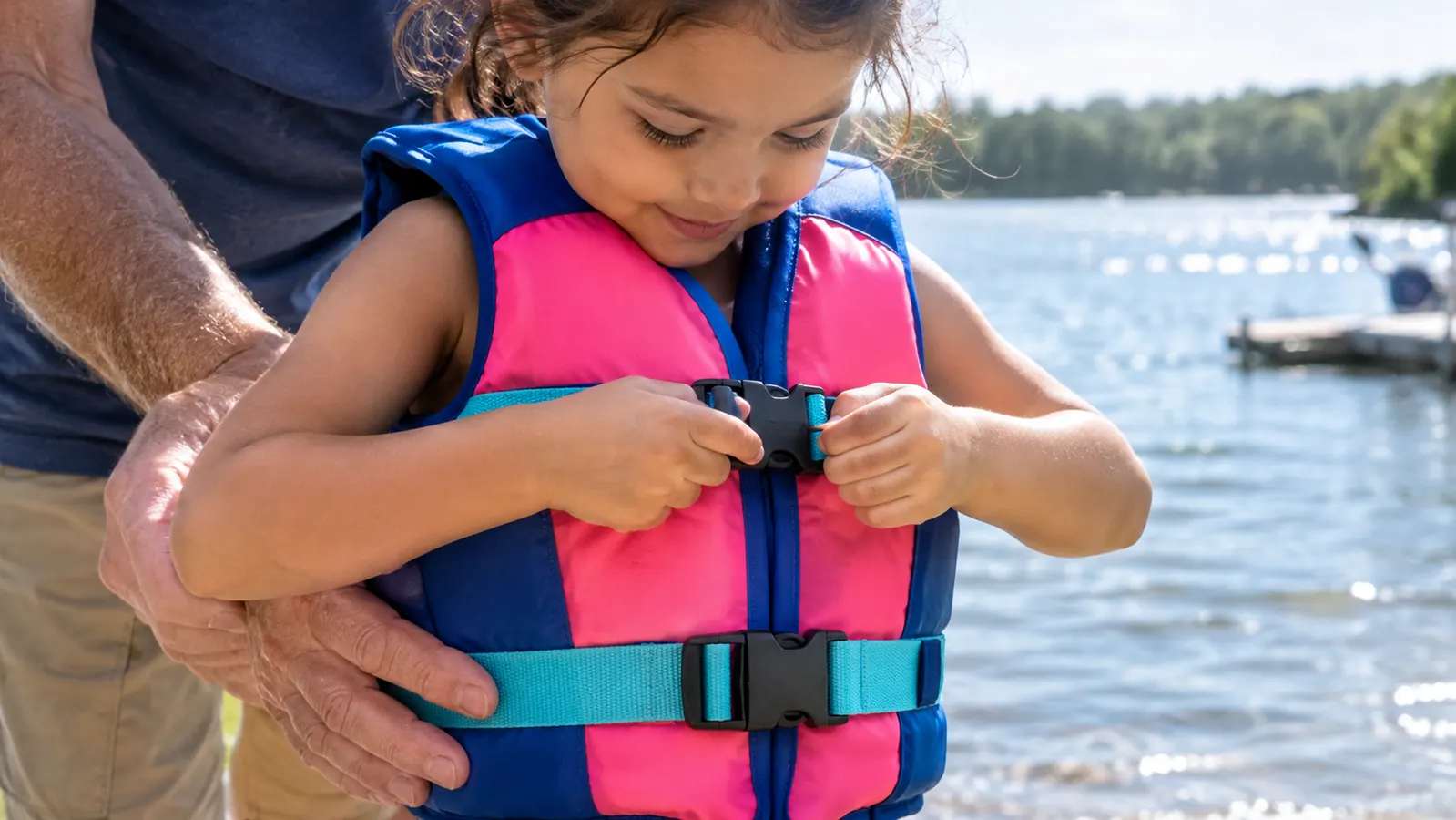
The routine is simple. The vest goes on over a swim shirt, I pull the adjustable panels snug, and the patented shoulder harness sits flat across the shoulders. That harness is the reason I bought it. The classic problem with kids' vests is that they ride up under the chin the second a child hits the water. This one does not do that, and after a full season I have watched it hold its position on two very different body sizes.
Putting the vest on is a two-minute job. I adjust the panels so it fits snug, check that the shoulder harness sits flat, and make sure it does not ride up when she lifts her arms. Then I send her toward the water and keep my eyes on her. Mason can put his on himself now, which tells you how often we have done this.
What the Paddle Pals Actually Is
The Body Glove Paddle Pals is a USCG-approved life jacket, listed as Level 70, Type V/III, for children ages 2 to 6. The size range is one size, 33 to 55 pounds, with a maximum weight capacity of 55 pounds. It is made of durable polyester with a multi-panel design, and the patented shoulder harness is the piece that does the heavy lifting. Body Glove has been making water gear for over 70 years, and it shows in the details.
The Type V/III designation matters more than most parents realize. Type III vests are meant for calm, inland water where rescue is close at hand. That is exactly the beach-and-pool situation most of us are in with young kids. It is not an open-ocean vest, and I would not pretend otherwise. What it is, is a well-made teaching vest that keeps a child floating while they learn to move their arms and legs. That matches how we actually use it, which is what a safety standard should do.
The multi-panel design is what keeps it comfortable. Instead of one stiff block of foam, the panels bend with the child's body. Ava, who is particular about clothes, stopped complaining about the vest after the first trip. Mason barely notices he is wearing it, which is the highest compliment a four-year-old's big brother can pay a piece of safety gear.
I will also say this as someone who spent thirty years in a school clinic: the USCG approval is the part you should not skip over. A lot of pool toys look like life jackets. This one is held to an actual standard, and when I read the label out loud to Kristen before the first beach day, she relaxed. That is what approval is for.
How It Held Up Over a Full Season
Here is the test that matters to me: twelve beach days, two kids, salt water, sand, sunscreen, and the trunk of a car that spends June through August with sand in every crevice. The Paddle Pals still closes the same way it did in May. The closure clicks clean. The polyester shows no fraying at the edges. The panels have not warped or gone stiff, which is what usually happens to cheap foam after a season in the sun. I checked it after every trip, because that is what a nurse does.
I rinse it in fresh water at the end of each beach day and hang it over the shower rod. That takes two minutes, and I suspect it is the reason the vest still looks new. Sand grinds into fabric if you let it sit, and a wet vest left in a hot car is how you get a vest that smells like low tide. A quick rinse and a dry in the shade has kept ours fresh all season.
The shoulder harness is the part I watched closest, because it is the part that fails on other vests. After a full season, it still sits flat. It has not stretched out, the stitching has not pulled, and it has not once ridden up under Mason's chin, even when he flops backward into the water on purpose because he thinks it is funny.
The other thing that survived the season is the hardware. Mason is not gentle with gear. He drops the vest on the sand, stands on it while he digs, and yanks at the straps. After twelve beach days the adjustable panels still pull snug and hold. I have had cheaper vests give up in half that time.
The Tradeoffs I Kept Hitting
The honest tradeoff is the size range. One size, 33 to 55 pounds, sounds like a great deal, and it is, if your child is in that range. But kids do not stay in that range forever. Lily wore this vest at five and six, and somewhere around seven and a half, at about 52 pounds, it got snug. She moved to a youth vest. So do the math on your own child's growth before you buy, and do not expect this to be the last vest you ever buy. Every family's growth chart is different, so this is not a complaint, just a heads up.
The second tradeoff is that the box contains the vest and nothing else. There is no storage bag, so I keep ours in a mesh tote with the swim shirts. It is a small thing, but if you are the person hauling gear across soft sand, you will want a bag for it before you want a bag for almost anything else.
The third tradeoff is the one I have to say as a former nurse: a Type V/III vest is a teaching tool, not a babysitter. I stay within arm's reach of Mason and Ava in the water. The vest keeps them floating while they learn, but it does not teach them to swim, and it does not remove my job. If you are looking for something that lets you look away, there is no such thing, and do not let anyone sell you one.
There is one more thing I want to be straight about. The Paddle Pals is not the vest I would choose for a child who cannot hold their head up on their own. It is a learn-to-swim vest for kids who are already moving in the water, not a flotation seat for babies. For Ava, who is four and 36 pounds, it is right. For a younger sibling who is not there yet, I would wait.
Alternatives I Considered
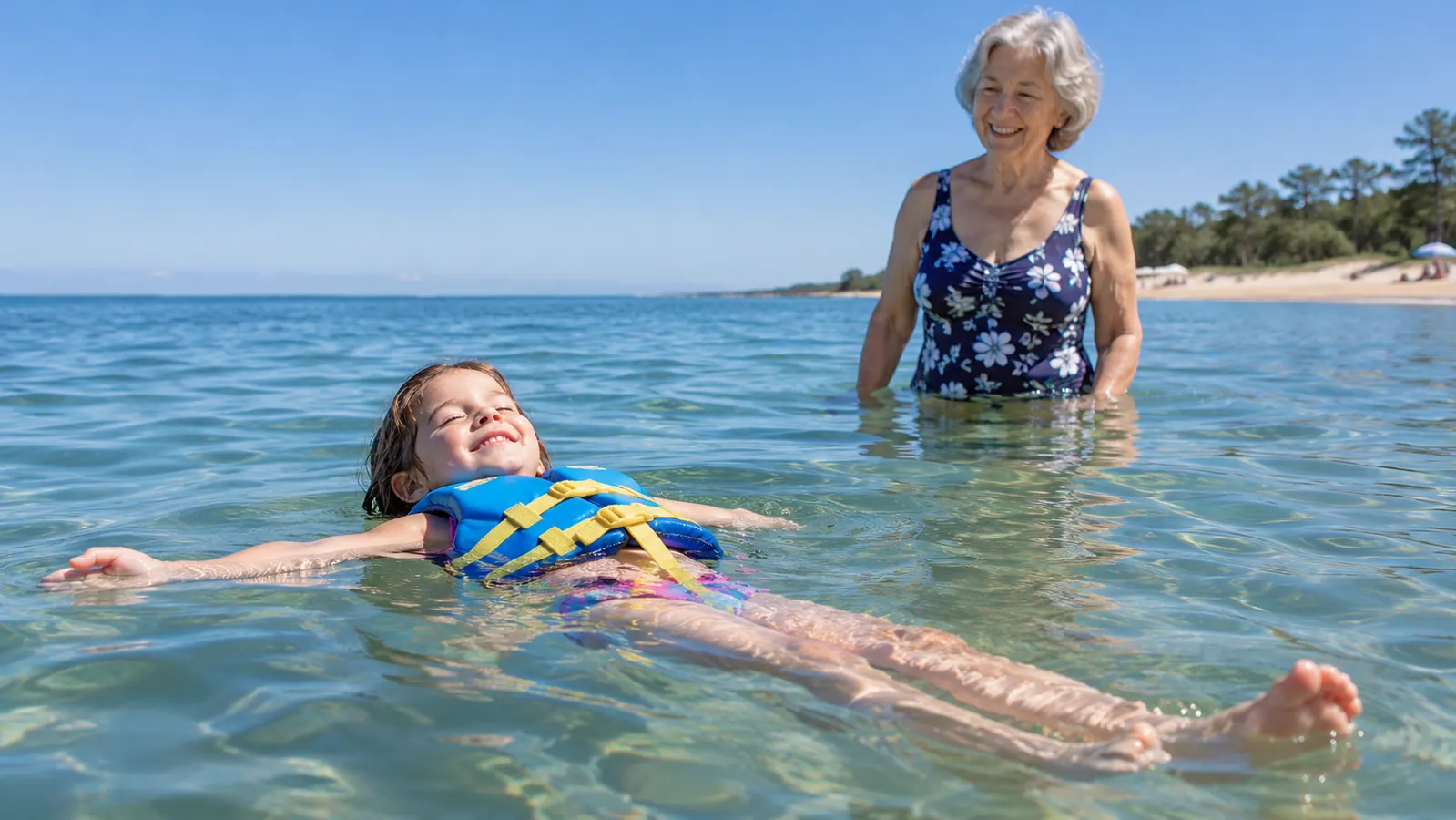
Before I settled on the Paddle Pals, I tried the drugstore arm floaties with Mason two summers ago. They were cheap, they were easy, and they spent most of the day sliding down his arms. They also did nothing to keep his head up, which is the part that actually matters. I threw them out at the end of that season and I have not bought another pair. That was the last time I trusted a pool toy with my grandson.
I also looked at a youth life jacket for Mason, the same style Lily wears now. It would have fit him fine, but it was too big for Ava, which meant buying two vests and carrying both. The Paddle Pals fit both of them from the same bag. For a grandmother who packs for three kids and one bad knee, that single fact won the argument.
I thought about buying a second Paddle Pals so Mason and Ava would not have to share. In the end I did not, because sharing turned out to be a feature. The vest goes from one child to the other in about two minutes, and it means I carry one vest instead of two. For a grandmother with a bad knee and a long walk across the sand, that is a real win.
What I Liked
- USCG approved at Level 70, Type V/III, so it meets a real safety standard
- One size fits both of my grandkids, 33 to 55 pounds
- Patented shoulder harness keeps the vest from riding up under the chin
- Durable polyester and multi-panel design survived a full season of salt water and sand
- Lightweight enough that a picky four-year-old will wear it without a fight
Where It Falls Short
- It is a season-or-two vest, not a grow-into-it purchase; Lily outgrew it at about 52 pounds
- The box holds only the vest, so you will want a bag for it
- Type V/III is for calm water and close supervision, not open water or rough conditions
Twelve beach days, two kids, one vest, and the shoulder harness never once rode up under Mason's chin.
Who This Is For
Buy the Body Glove Paddle Pals if you have a child between about 33 and 55 pounds who is learning to swim in a pool, a lake, or calm Gulf water. It is ideal for grandparents and caregivers who want one vest that fits more than one kid, and for parents who want the peace of mind of a USCG-approved life jacket that actually stays where it is supposed to stay. If your child is in the size range and you are the one carrying the gear, this is the vest I would pack first. If you are on the fence, that is the question to ask yourself: who is carrying the gear?
Who Should Skip It
Skip it if your child is over about 55 pounds, or if they have already outgrown the 33-to-55 range, the way Lily did. She is eight and about 52 pounds, and she is more comfortable in a youth vest sized for her. Skip it if your child will spend most of their time on a boat in open water, because a Type V/III vest is made for calm water and close supervision, not rough conditions. And skip it if you are looking for a set-it-and-forget-it solution, because no life jacket replaces an adult within arm's reach. There is no shame in a vest that fits the child you have right now.
The vest I pack first for a beach day with the little two
If you have a child in the 33-to-55-pound range who is learning to swim, this is the life jacket I would buy again. It fits two of my grandkids, it stays put, and it survived an entire Gulf Coast season. Check today's price on Amazon and see if it fits your family the way it fits mine.
Amazon Check Today's Price on Amazon →