
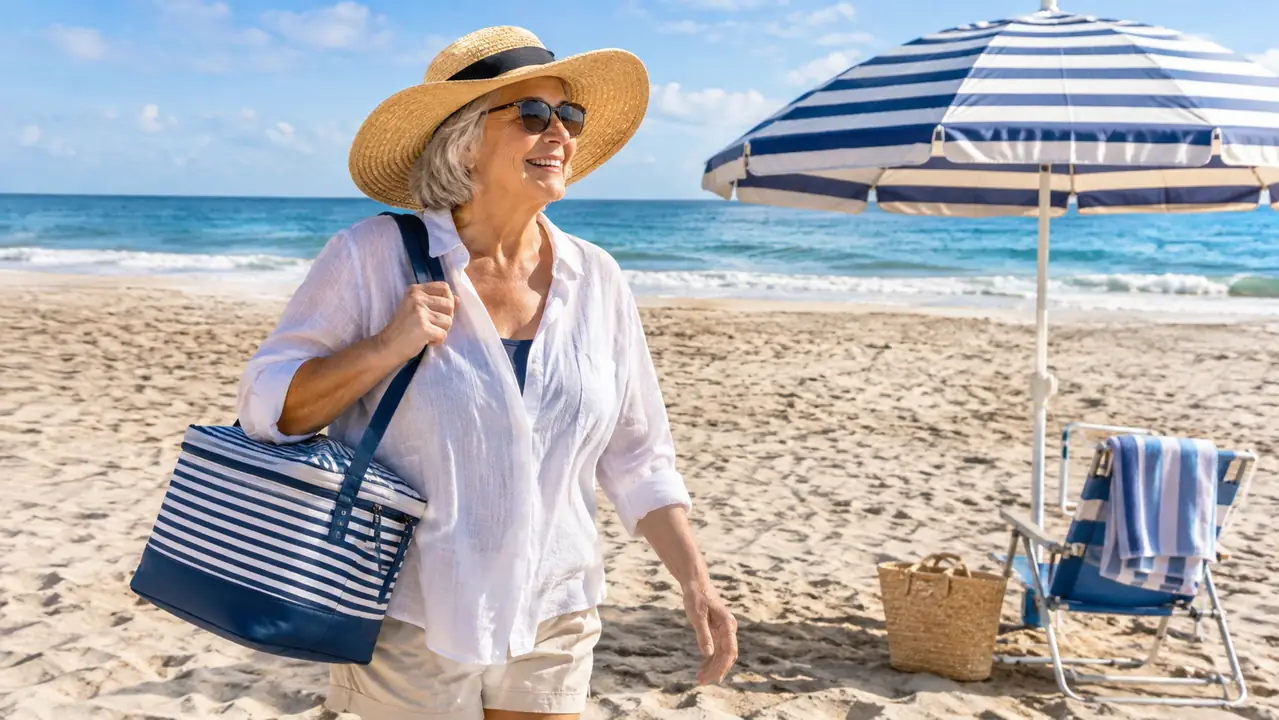
I am Marlene Hollis, and I have hauled three grandkids to the beach in Gulf Shores most summer weekends for years. Lily is eight, Mason is six, and Ava just turned four, which means I pack like I am provisioning a small expedition: drinks, sandwiches, fruit, wet wipes, sunblock, a change of clothes for everyone, and at least two things I will forget anyway. Last spring I got tired of wrestling a hard cooler across soft sand with a stiff left knee, so I ordered the Lifewit Insulated Cooler Bag. This is what a full season with it actually looked like.
A quick note on how I used it before I get into the details. This is the 24-can size, which Lifewit lists as 15 liters, and it rode on my shoulder from the parking lot to our usual spot almost every weekend from Memorial Day to Labor Day. It also came along for a kayak trip, a few road trips, and more grocery runs than I can count. It is not a hard cooler and it does not pretend to be one. It is a soft-sided bag that does a specific job, and once I stopped expecting it to be something else, I liked it a lot.
The Quick Verdict
The Lifewit beach cooler bag is the best beach-day carry I have found for my situation: light enough for a 67-year-old knee, tough enough for a season of sand, and organized enough to keep three kids fed and watered without a single dig through a black hole of a bag.
Amazon Check Today's Price →Haul less, enjoy the beach more
The Lifewit insulated cooler bag carries a full day of drinks and snacks for three grandkids without making you fight the sand. See today's price on Amazon.
Amazon Check Today's Price on Amazon →How I've Used It
Our beach access has a long walk over soft sand from the parking lot. With a hard cooler I used to stop twice to switch arms and once to just stand there and regret my choices. The Lifewit bag changed that the first weekend. It weighs 440 grams empty, which is about what my old purse weighs, so the weight I carried was mostly the weight of what was inside it.
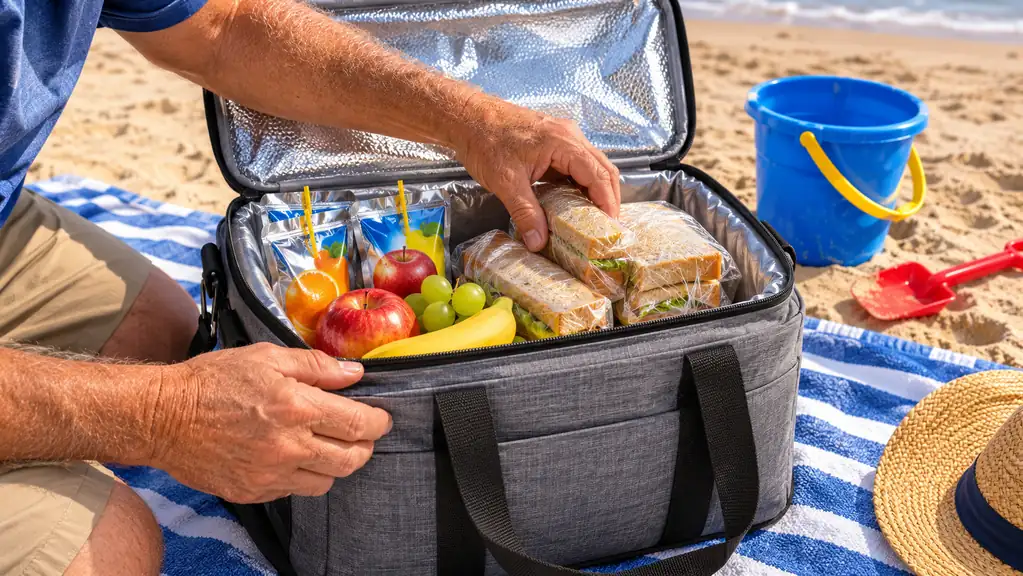
I packed it the same way almost every trip. The main compartment held a half-gallon jug of water, four juice pouches, a bag of ice, and a stack of sandwiches wrapped in wax paper. The front pockets took sunblock, wet wipes, and Ava's sunglasses. The side pockets held my phone and a small bag of pretzels. The wide top pocket was where I kept the car keys and a little first-aid kit, because a retired school nurse does not go anywhere without one.
The bag is 10.7 inches long, 8 inches wide, and 10.4 inches high, so it is compact enough to sit at my feet under the umbrella instead of becoming a table or a tripping hazard. The shoulder strap meant I could keep both hands free, which matters when one hand is holding Ava's hand and the other is carrying the bag of sand toys.
The first Saturday in June, I caught myself on the walk from the parking lot and realized I had not stopped once. With the hard cooler, that same walk meant two stops to switch arms and one stop to just stand there and catch my breath. The Lifewit bag rode on my shoulder and stayed there, and I had Ava's hand in one hand and the bag of sand toys in the other. The strap is wide enough that it did not dig in the way the hard cooler handle did, and I could shift it from one shoulder to the other without setting anything down. By the Fourth of July I had the routine down: keys in the top pocket before I left the car, sunblock in the front pocket, wet wipes in the left side pocket, and the bag slung so it rode on my hip. It sounds like a small thing, but when you are 67 and your left knee complains on soft sand, not having to stop and set the cooler down twice is the difference between arriving at the umbrella ready for the day and arriving already tired. Kristen noticed it too. By midsummer she had stopped bringing her own cooler and just packed extra drinks into mine.
What I Expected Versus What I Got
I will be honest: I expected a cheap soft cooler that would leak condensation, tear at the seams, and need replacing by July. What I got was a bag that survived an entire season of beach days, a kayak trip, and a dozen road trips, and still looks presentable enough to carry into a grocery store.
The exterior is 600D oxford fabric, which I had to look up after the first trip because I was surprised at how well it shed sand. A quick shake and most of it fell right off. The lining is PEVA foil and EPE insulation, and that combination did a better job than I expected at keeping drinks cold. On a 90-degree day, with a bag of ice in the bottom, the juice pouches were still cold at noon. I cannot tell you the ice lasted all day, because it did not, but the drinks stayed drinkable and the sandwiches stayed cool.
The first time I used it, I packed it the night before and left it in the refrigerator overnight, because I had read somewhere that pre-chilling a cooler helps. I do not know if that is true for a soft bag, but the drinks were cold at noon that day and I have done it every Friday night since. By August I had also learned that the bag does better when I do not overstuff it. The bag is rated for 15 liters, and when I tried to push it to hold a gallon jug and a whole watermelon, the zipper still closed but the bag bulged and the shoulder strap sat awkwardly. When I packed it to its actual size, it carried better and the cold lasted longer, because there was room for the ice to sit at the bottom instead of being buried under everything else. That was a lesson I learned the hard way on the second trip, when I packed the bag so full that the juice was warm by eleven and I spent the rest of the afternoon handing out warm drinks to three disappointed kids. Kristen laughed and said I had packed it like a suitcase, and she was right. After that I stuck to the 15-liter reality, and the bag worked the way it was supposed to.
The waterproof claim held up in the ways that mattered to me. Condensation from the ice bag pooled inside the lining instead of soaking through to my shirt. I tested that by accident more than once. A small leak in a juice pouch also stayed contained inside the bag, which saved the blanket and probably the whole afternoon.
The moment I knew the Lifewit bag had earned its place was the Saturday a juice pouch leaked, and the mess stayed inside the bag instead of ending up on the blanket and three pairs of swim trunks.
The Pockets That Saved the Day
The pockets are the reason I reach for this bag instead of the old canvas tote. It has one wide top pocket, two side pockets, and two front pockets, and I used every single one. On a beach day, pockets are not a luxury. They are the difference between knowing where the sunblock is and turning the whole bag inside out while a four-year-old informs you that she is burning.
My system by midsummer was simple. Top pocket: keys, phone, lip balm, and the small first-aid kit. Left side pocket: wet wipes. Right side pocket: a bag of pretzels or crackers. Front pocket one: sunblock and Ava's sunglasses. Front pocket two: Mason's little sand toys that he insisted on bringing even though the beach is made of sand. Everything had a home, and everything stayed where I put it.
The afternoon that sold me on the pockets was the one where Mason got sand in his eyes, Ava lost her sunglasses to a wave, and Lily needed a wet wipe for a cut on her toe, all within about twenty minutes. I did not have to stand up once. The rinse bottle was in the left side pocket, the spare sunglasses were in the front pocket where I had put them that morning, and the wet wipes were in the right side pocket. A friend visiting that day asked if I had a system, and I told her the system was that everything had a pocket and I never moved anything. That is the whole thing. If you put something in the same pocket every time, you can find it without looking, and on a beach with three kids you are usually looking for something. The five pockets are not a gimmick. I used all five on every single trip, and by August I could pack the bag in the dark of the hallway before sunrise.
The one thing I would change is that the main compartment is one open space. There is no divider, so the bag of ice ends up sitting on top of the sandwiches unless I pack it in a certain order. I learned to put the ice in first, then the drinks, then the food on top. It worked, but a small interior divider would have made it easier.
How It Held Up Over a Full Season
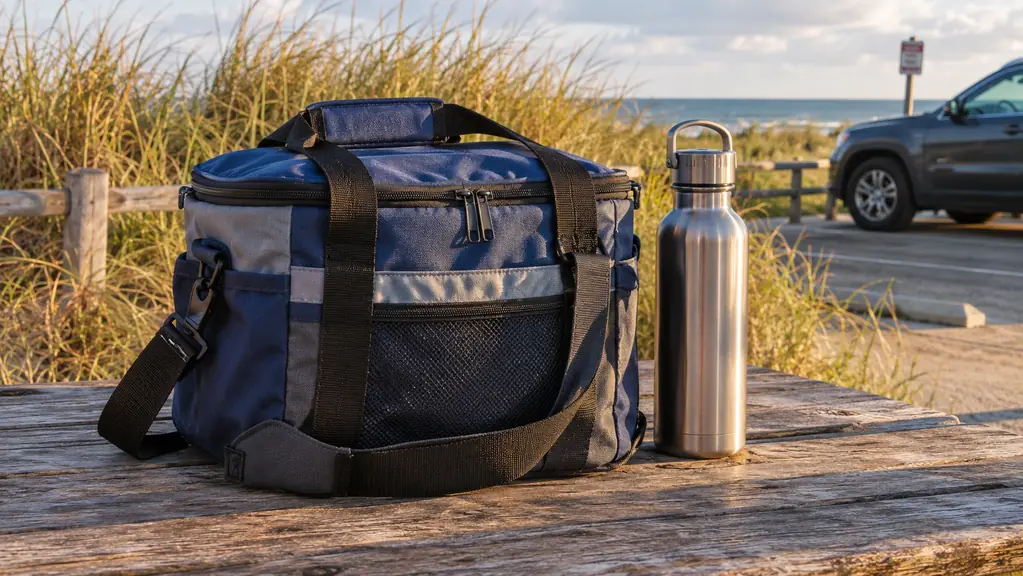
I am hard on beach gear. Everything I own gets sand in it, salt water on it, and then gets left in a hot car for a week. The Lifewit bag took all of that and kept going. The zippers never jammed, even after a few grains of sand worked their way in. The strap stitching held. The fabric never tore, and the bottom never sagged the way I worried it would.
The kayak trip was the surprise. My neighbor and I took the bag along on a paddle out to a sandbar in August, and I expected it to be soaked through by the time we got back. It was damp on the outside, but everything inside stayed dry, including the paperback I had thrown into the top pocket. On the road trips, it sat on the back seat between Ava and Mason and acted as a snack station, and it survived being sat on, stepped on, and used as a pillow. By Labor Day I had also used it for at least a dozen grocery runs, mostly because it is easier to carry than a paper bag and it fits on the passenger seat of my silver CR-V without sliding off. It has carried wet swimsuits home from the beach, a dozen ears of corn from the farmers market, and a bag of ice that dripped the whole way from the gas station. The one time I thought I had finally broken it was when a bottle of tea leaked in the side pocket overnight. The next morning the pocket was damp, but the lining had kept it from going anywhere else, and after a rinse and a day in the sun it was as good as new.
The only real wear I noticed was cosmetic. The fabric showed a little fading by the end of the summer, and no amount of shaking gets every grain of sand out of the pockets. I also wish the bag had a more rigid bottom, because when it was fully loaded it sometimes slumped over on its side in the car. None of that affected how it worked.
One thing I want to be straight about: this is not a hard cooler. If you need ice to survive a full day in direct sun, or if you plan to keep raw meat cold for hours, buy a hard cooler. The Lifewit bag kept our lunch cold and our drinks drinkable, and that was its job. It is a day bag, and as a day bag it is excellent.
What I Liked
- Weighs only 440 grams empty, so your shoulder and your knees thank you
- Five pockets keep sunblock, wipes, keys, and snacks exactly where you can find them
- Waterproof lining contains condensation and small spills
- 600D oxford fabric sheds sand and survived a full season of beach days
- Compact 15-liter size fits under an umbrella and in the car without taking over
Where It Falls Short
- No interior divider, so packing order matters to keep ice off the food
- Not a hard cooler; ice will not last all day in direct sun
- Soft bottom means a fully loaded bag can slump over in the car
Who This Is For
This bag is for the person who carries the beach day on their shoulder. The parent or grandparent who needs both hands free to hold a little one's hand, who wants sunblock and wet wipes within reach without a dig, and who would rather spend the afternoon in the water than fighting with a heavy cooler across soft sand.
It is also for anyone who wants one bag that does more than the beach. I used mine for kayaking, road trips, and grocery shopping in the same week. At 15 liters it is the right size for a day out, not a week-long camping trip, and that is exactly what it is designed to be.
Who Should Skip It
If your beach day means a full cooler of ice that has to last from sunrise to sunset, or if you are feeding a crowd and need to haul twenty pounds of drinks, this is not the bag for you. A hard cooler with real insulation will do that job better. The Lifewit bag is a day bag for a family of four or five, not a catering cooler.
I would also skip it if you want a bag that stands up on its own. The soft bottom means it flops over when it is not packed just right. That never bothered me on the sand, where everything flops over anyway, but if you want a cooler that sits upright in the trunk, look elsewhere.
One bag for the whole beach day
After a full season of beach weekends, the Lifewit insulated cooler bag is still the first thing I pack. See today's price on Amazon and find out if it fits your beach routine.
Amazon Check Today's Price on Amazon →