
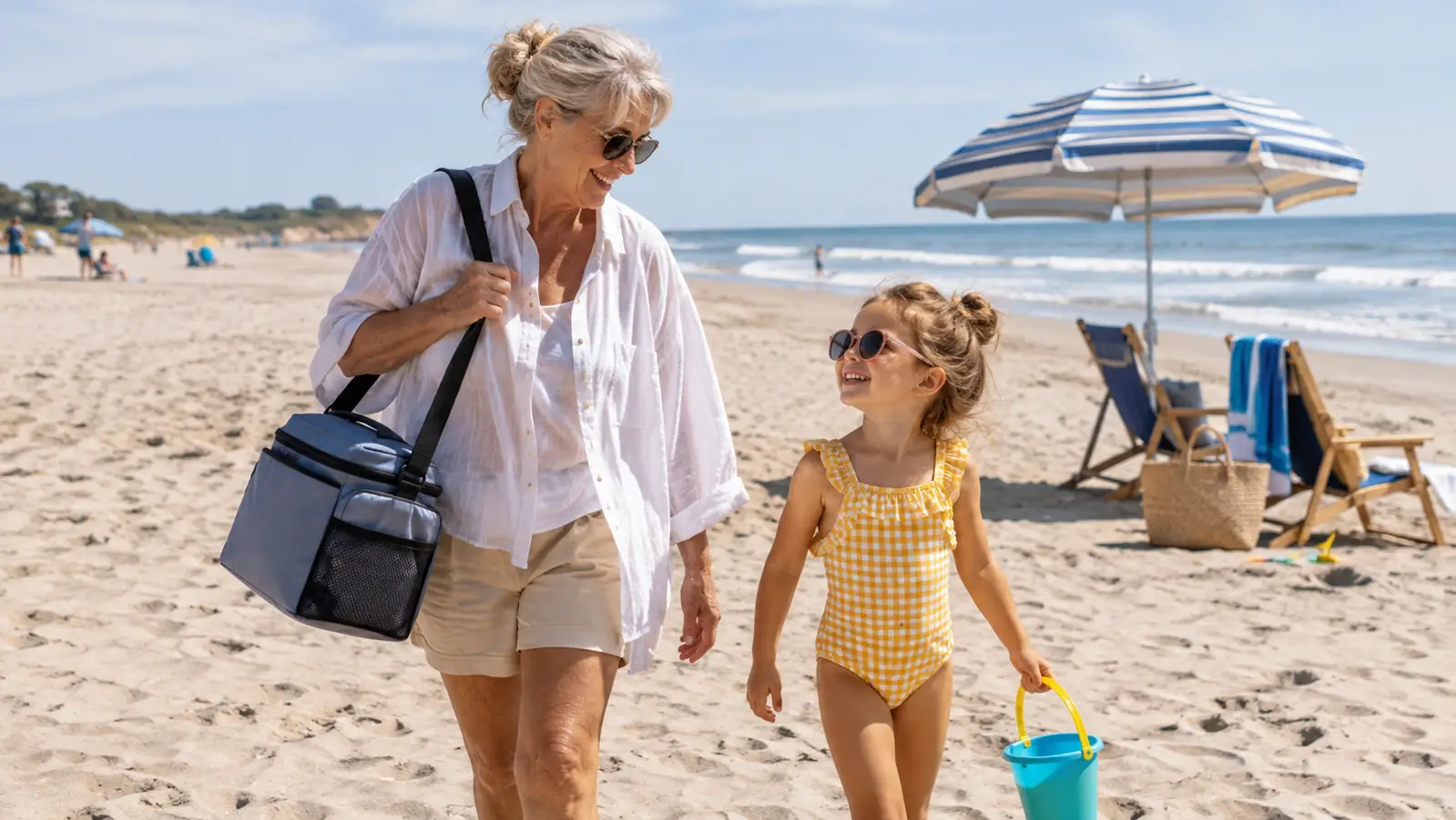
Every beach morning starts the same way at our house. I load the Lifewit cooler bag with juice boxes, sliced watermelon, string cheese, and a few bottles of water, then I stand in the kitchen and wonder if any of it will still be cold by the time we pack up. With three grandchildren, Lily, Mason, and Ava, I have learned that a warm drink on a hot beach is not a small disappointment. It is the kind of thing that ends a good day early.
I am Marlene Hollis, a retired school nurse who lives about fifteen minutes from the beach in Gulf Shores, Alabama. I have a stiff left knee, a silver Honda CR-V, and a lot of experience hauling gear across soft sand. The Lifewit insulated cooler bag has been my go-to for two summers now, and I have figured out the difference between a cooler that stays cold and one that does not. It is not magic. It is mostly about how you pack it, where you put it, and how often you open it.
Start With a Bag That Actually Holds the Cold
The Lifewit cooler bag uses a PEVA foil and EPE insulated lining inside a 600D oxford exterior, and it holds up to 24 cans. Before any of my tips matter, you need a bag that does its part.
Amazon Check Today's Price on Amazon →Step 1: Chill the Bag Itself the Night Before
The first mistake most people make is packing a warm cooler with cold food. The bag has to spend its own energy cooling the walls before it can keep your food cold. So the night before beach day, I put the empty Lifewit cooler bag in the refrigerator. Not the freezer, the refrigerator. It fits easily because the bag is lightweight and soft-sided, and it does not take up much room once it is empty. I leave it in there overnight, and in the morning it is cool to the touch before a single drink goes in.
In the morning I take the bag out, and it is already cool to the touch. That gives us a head start. This one step alone seemed to add hours to how long our drinks stayed cold. It costs nothing and takes about ten seconds of effort. The first time I tried it, I forgot until after dinner, and the bag only had about six hours in the refrigerator. It still helped, but not as much as a full night. Now I put the bag in as soon as I clear the kitchen after supper.
If you cannot fit the whole bag in the refrigerator, the next best thing is to put a frozen water bottle in the bag the night before and leave the bag closed. The bag is insulated, so the cold stays inside and chills the interior while you sleep. While the bag chills, I fill three small water bottles about two-thirds full and lay them flat in the freezer. Flat bottles stack better and freeze faster than round ones. I have learned to label them with a piece of tape, because more than once I have grabbed one thinking it was a cold drink for the drive.
Step 2: Pack Food and Drinks in Layers, Not in One Heap
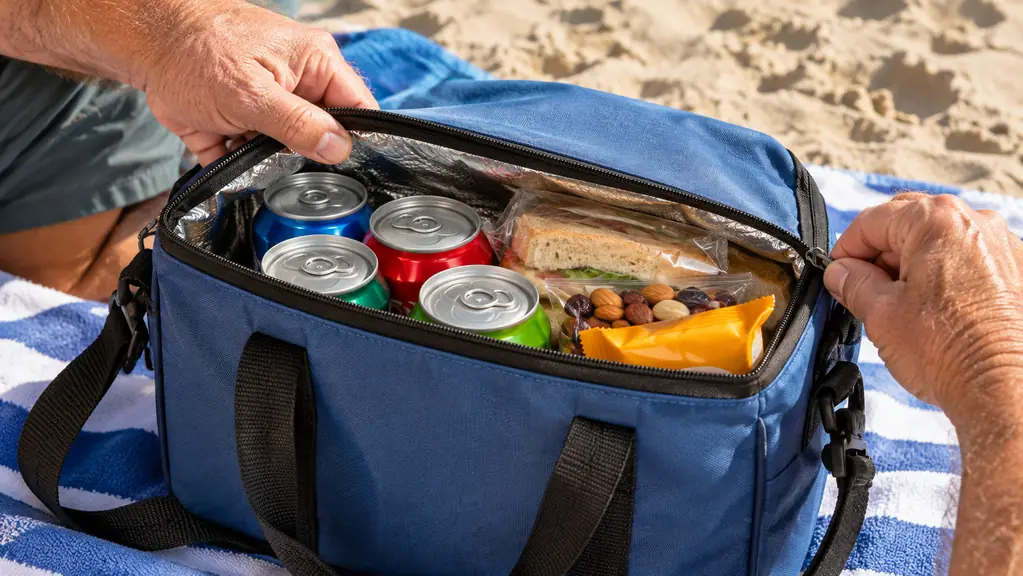
The way you pack matters more than most people think. I start with a layer of frozen items on the bottom. I freeze a few small water bottles the night before and use them as ice packs. They keep things cold, and by the end of the day the grandchildren can drink the melted water. Two jobs, one bottle.
Then I pack the things we will need last at the bottom and the things we will need first on top. Drinks go in the middle, close to the frozen layer. Fruit and softer foods go on top so they do not get squashed. The Lifewit bag has 1 wide top pocket, 2 side pockets, and 2 front pockets, so I put sunscreen, wipes, and napkins in the pockets instead of burying them in the main compartment. That way I am not opening the main zipper every five minutes, which is the fastest way to let cold air out. I pack the juice boxes standing upright, then set the frozen water bottles around them like bookends, so the cold touches every side of the drink instead of just the bottom. On a normal Saturday we bring eight juice boxes, four frozen bottles, a bag of grapes, and a container of watermelon. That fills the 15-liter bag about three-quarters full.
I also fill empty space. A cooler that is only half full loses cold air much faster than a full one, because the air inside warms up quickly. If we are not bringing much food, I add a few extra frozen bottles just to take up room. The Lifewit holds up to 24 cans, so on a full beach day we rarely have much empty space anyway.
Step 3: Keep It in the Shade, and Put a Towel Over It
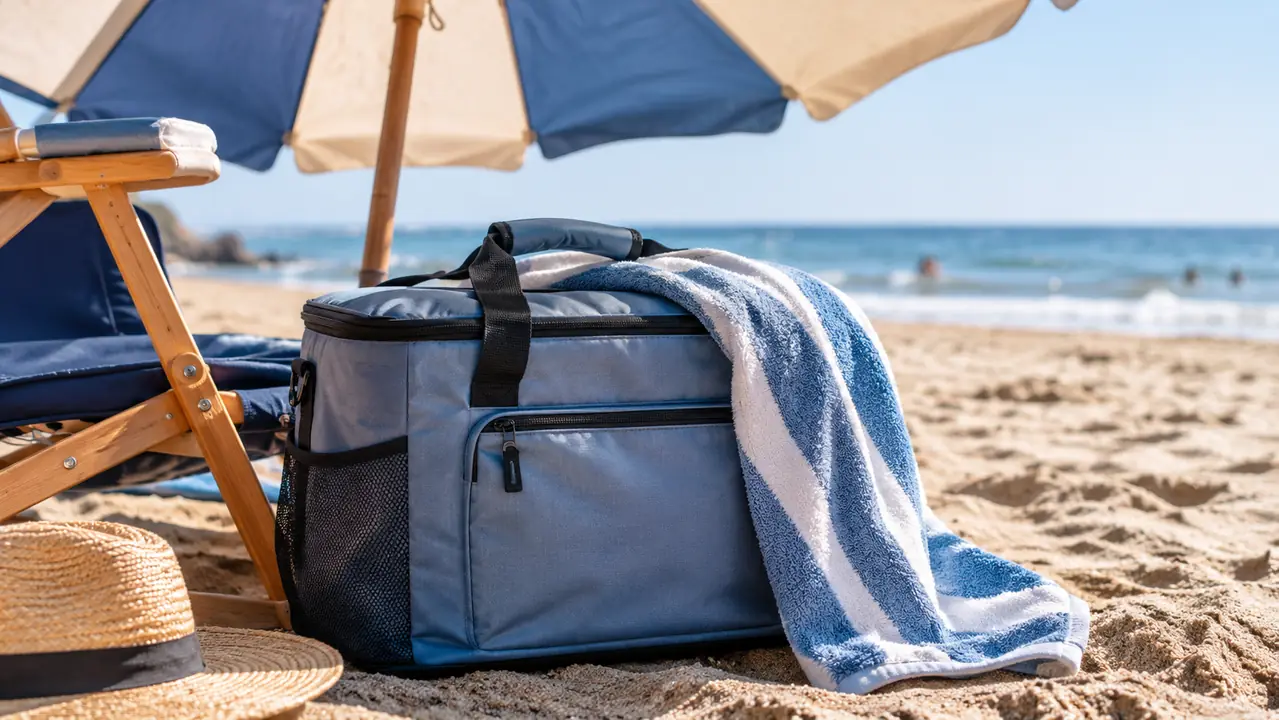
Direct sun is the enemy. I learned this the hard way on a July afternoon when I left the cooler sitting in full sun for two hours. By the time Lily asked for her juice, it was barely cool. Now the Lifewit bag goes under the beach umbrella the moment we arrive, and I drape a light-colored towel over the top. The towel reflects some of the sun and adds another layer between the heat and the bag.
The bag itself is made of 600D oxford fabric with a PEVA foil and EPE lining, which does a good job on its own. But shade and a towel cost nothing, and they make a real difference on a long day. I also angle the bag so the zipper faces away from the sun. It sounds like a small thing, but it keeps the top of the bag from heating up where we open it most. One Saturday in July I forgot the towel. The temperature at the beach access read 94 degrees by noon, and the Lifewit sat under the umbrella but with the sun moving around it. By two o'clock the drinks were still cool but not cold. The next trip I put the towel back on and the difference was obvious. I also check the angle of the umbrella every hour or so, because the sun moves and a bag that was shaded at noon can be in full sun by two. I move the bag a few feet rather than fight the umbrella.
Step 4: Open It Like You Mean It
Every time you open the bag, cold air escapes and warm air rushes in. With three grandchildren, I know how tempting it is to open the bag, look inside, close it, open it again, and then decide what everyone wants. That is how you lose the cold.
So I have a rule: I get everything out for one snack time at once. I open the bag, pull out the drinks and snacks for everyone, close the bag immediately, and hand things out. The bag does not sit open while we eat. It takes practice, but the grandchildren have learned to tell me what they want before I open the zipper. One open, one close, done. We do a quick roll call first. Lily wants apple juice, Mason wants water, Ava wants whatever Lily has. If I open the bag and then wait for them to decide, the cold air is gone in the time it takes to argue.
I also keep the bag closed when we are in the water. If the grandchildren want a drink, they come to the blanket and ask. That keeps the cold air inside and the sand outside, and it means the Lifewit is still cold at four in the afternoon instead of warm by noon.
Step 5: Bring a Second Small Bag for the Things You Reach For Constantly
The Lifewit has plenty of pockets, which helps, but some things still get reached for every ten minutes. Sunscreen, wipes, and the grandchildren's sunglasses are not worth opening the main cooler for. I keep those in a small separate bag that sits on the blanket. The cooler bag stays closed, and the cold stays inside.
The Lifewit is also lightweight enough that I can carry it with the included shoulder strap, which matters to me because of my knee. On the long walk over soft sand from the parking lot, I carry the cooler bag on one shoulder and hold Ava's hand with the other. The bag weighs only 440 g empty, so the weight I feel is mostly the food and drinks, not the bag itself.
When we get to the spot, the bag stands on its own well enough to sit beside the chair, and the shoulder strap tucks underneath. By the end of the day, the frozen bottles have melted into drinking water, the juice boxes are still cool, and I have not once had to carry a dripping, soggy mess back to the car. On the walk back, the Lifewit is noticeably lighter because the grandchildren have drunk most of the bottles and eaten most of the snacks. The melted frozen bottles pour out easily because the lining is smooth, and I rinse the bag at the outdoor shower before we drive home so the car does not smell like old fruit. Even at the end of a long day, the 440 g empty weight means it does not pull on my shoulder the way a hard cooler would.
What Else Helps
A few other things have made beach days easier for us. I freeze grapes and watermelon chunks the night before, so they double as cold packs and stay refreshing. I fill the water bottles only two-thirds full before freezing, so they do not crack. And I always put the Lifewit bag in the car last, right before we leave, so it does not sit in a hot trunk while we finish loading. If we stop for gas on the way, the bag comes into the store with me. It is light enough that it is not a burden, and it keeps the cold going a little longer.
I also wash the bag out when we get home. The PEVA foil lining wipes down easily with a damp cloth, and I leave the zipper open so it airs out before the next trip. A clean bag stays fresher, and it is ready to go back in the refrigerator the night before our next beach day. I put a small trash bag in one of the side pockets on beach mornings. Wet wipes, sticky juice boxes, and watermelon rinds go straight into it instead of back into the cooler. That keeps the inside of the Lifewit dry, and a dry bag stays cold better than a damp one. I also keep a kitchen towel in the front pocket to wipe hands before anyone reaches into the main compartment, because sand on fingers ends up in the bottom of the bag and it is easier to keep it out than to clean it out.
The day I started chilling the empty bag overnight and keeping it in the shade, our drinks were still cold at four in the afternoon. That was the day the grandchildren stopped asking me to carry warm juice boxes.
Give the Lifewit a Real Beach Day Test
The Lifewit insulated cooler bag is lightweight, holds up to 24 cans, and has pockets for everything you do not want buried in the main compartment. Pack it the night before and see how long your drinks stay cold.
Amazon Check Today's Price on Amazon →